

Best WayShot Styles for Vintage Point-and-Shoot Lovers in 2026
What Is the Short Answer?
For the strongest vintage point-and-shoot feel in WayShot, start with DigiCam for direct-flash nights, parties, and close candid portraits. Choose DigiLite for daylight travel, group photos, and warmer compact-camera color without heavy flash. Clean Girl suits soft portraits, B&W favors contrast and texture, and ProCam keeps detail cleaner when the original photo is already strong. No Style recreates a physical camera sensor exactly, but the right match between light, subject distance, and color can make an iPhone photo feel much closer to a spontaneous point-and-shoot memory.
What Do Point-and-Shoot Lovers Usually Want From a Phone Photo?
The appeal of an older compact camera is not simply “more grain.” It is the combination of quick framing, imperfect timing, direct light, recognizable color, and the feeling that the photographer was part of the moment. A good phone version should keep that immediacy without making faces, highlights, or small details look artificial.WayShot approaches this through scene-oriented Camera Styles. Its current US App Store listing separates after-dark flash, daylight color, warm portrait, monochrome, and polished-detail directions rather than presenting one universal vintage filter. The guide to recreating the early-2000s digicam look with WayShot provides a useful starting point: choose the light first, then let the Style support what was actually captured.
Which WayShot Style Best Matches Classic Flash Snapshots?
DigiCam: Best for parties, night portraits, dinners, and concerts
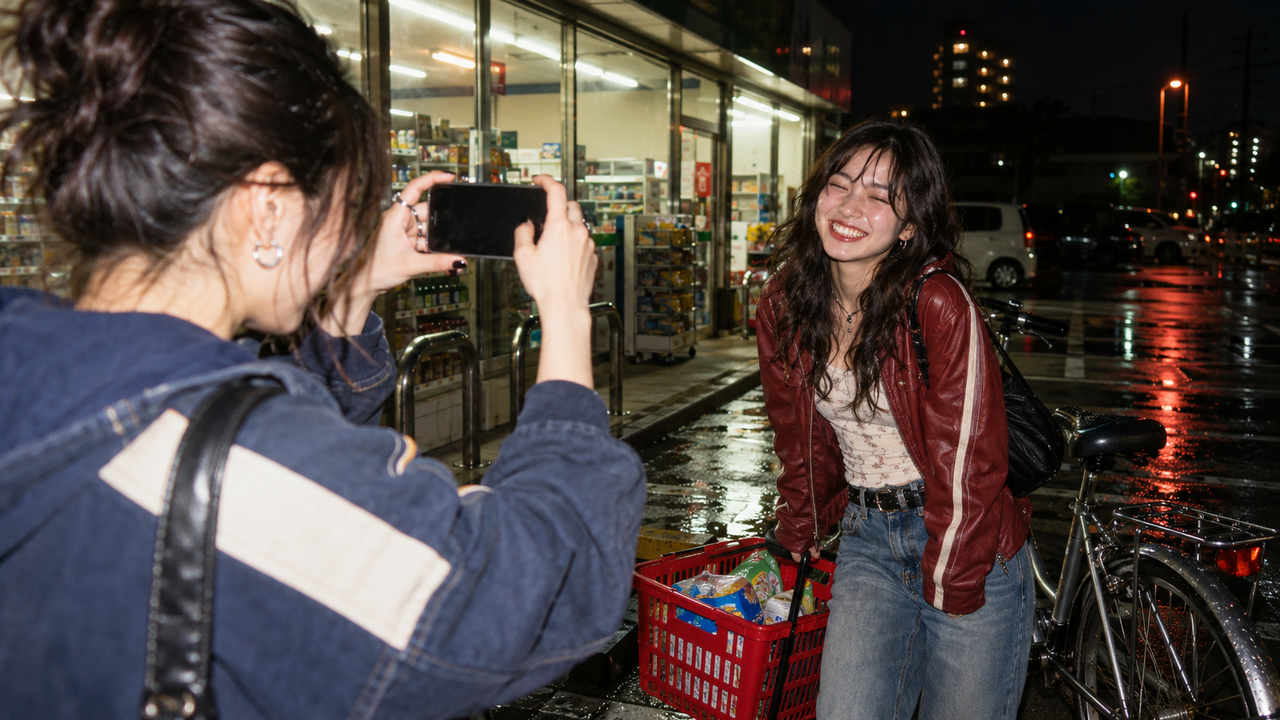
DigiCam is the clearest choice for people who associate vintage point-and-shoot cameras with bold direct flash, visible grain, saturated color, and a slightly imperfect after-dark finish. It suits a birthday table, a friend outside a club, a restaurant portrait, or a close candid photo at a concert.Why point-and-shoot lovers may like it: The nearby subject stands out from a darker background, and stronger color gives the frame an immediate snapshot energy. The result can feel less carefully produced than a conventional smartphone portrait.Its limit: A flash-led Style cannot create the physical effect of light that never reached the subject. Stay within a useful phone-flash distance and check reflective skin, glasses, mirrors, and pale clothing. DigiCam also cannot recover a face that is out of focus or a highlight that is already clipped.For a closer look at the aesthetic direction, see how DigiCam shapes flash-led social photos.
Which Style Works Best for Daylight Compact-Camera Color?
DigiLite: Best for travel, walks, beaches, groups, and casual photo dumps
DigiLite is the more natural starting point when good daylight is already doing most of the work. WayShot describes it through lighter grain, warm color, and no-flash ease, which fits the way many compact cameras were used on holidays, school trips, weekend walks, and afternoons with friends.Why point-and-shoot lovers may like it: It keeps the image casual and colorful without making the texture the main subject. Faces, clothing, sky, greenery, and small environmental details can remain part of the memory.Its limit: DigiLite is not designed to turn a nearly black room into a bright flash snapshot. In harsh midday sun, move into open shade when possible; in fading light, hold the phone steady and capture before the background loses useful detail.
What If You Want a Softer Portrait Instead of a Flash Look?
Clean Girl: Best for window light, coffee runs, outfits, and relaxed portraits
Not every old point-and-shoot memory was taken at a party. Clean Girl offers a warmer, softer direction for portraits in natural window light, bright cafés, or late-afternoon streets. Its balanced exposure and golden warmth make it a practical option when the person matters more than visible grain.Why it works: It can keep an everyday portrait gentle and recognizable while still giving the camera roll a clear mood.Its limit: If the room is already dominated by yellow bulbs, extra warmth can make skin and white objects look too similar. Use neutral light where possible and compare the finished face with the original before sharing.
When Does Black and White Feel More Like a Vintage Point-and-Shoot?
B&W: Best for street scenes, gestures, hard light, and distracting color
B&W works when the character of the image comes from contrast, expression, or texture rather than nostalgic color. It can simplify a rainy street, a shadowed doorway, hands at work, or a portrait surrounded by mixed signs and lighting.Why point-and-shoot lovers may like it: High contrast and deeper texture can make a small, spontaneous moment feel timeless without forcing an orange or faded palette.Its limit: Monochrome does not repair weak composition or missing shadow detail. Look for a clear silhouette, face, reflection, or gesture before removing the color.
When Is a Cleaner Style Better Than a Vintage Effect?
ProCam: Best for portraits, personal archives, and detail-rich scenes
ProCam is the cleaner option in WayShot’s current lineup, with refined color and crisp detail. It makes sense when the memory itself already carries the nostalgia: a childhood room, a favorite jacket, a handwritten note, a family table, or a portrait you want to keep for years.Why it works: A restrained finish avoids turning every meaningful object into an obvious effect. For point-and-shoot lovers, that can resemble the cleaner end of compact-camera photography rather than its flashiest version.Its limit: Crisp processing depends on a usable original file. It will not manufacture fine detail after motion blur or missed focus, and it may reveal digital noise in an underexposed frame.
Why Does the Same Style Look Different in Daylight, Flash, and Low Light?
A Style remaps the color, contrast, and texture already present in the frame. It does not replace the original light. Soft daylight preserves more color and detail; direct flash separates a nearby subject from the background; low light introduces more movement, noise, and mixed color.That is why copying a Style name cannot guarantee an identical result. The practical guide to how digicam photos change with daylight, flash, and low light explains the relationship in more detail. Match the Style to the scene instead of increasing the effect until every frame looks the same.
Should You Shoot With a WayShot Style or Edit Later?
WayShot’s official App Store description supports both paths: choose a Style while shooting or apply one to a photo from the library. Shooting with the direction in mind is useful when the light is stable and the look affects how close you stand, whether you use flash, or how much background you include.Editing later is safer when the moment cannot be repeated. Capture the clearest expression first, keep the original, and compare DigiCam, DigiLite, or another Style afterward. A simple five-step workflow is outlined in WayShot’s digicam-style editing guide.
How Can You Build a Point-and-Shoot-Style Camera Roll?
Use repetition, not uniformity. Keep a similar distance from people, allow some environmental context, and repeat one or two color directions. DigiLite can carry the daylight frames, DigiCam can define the evening, and B&W can rescue a visually busy moment without forcing it to match the color set.A believable camera roll should still show the day changing. Let noon remain bright, flash remain abrupt, and night remain dark. The point-and-shoot feeling comes from reacting quickly to real scenes, not from making every image share the same grain and temperature.
Frequently Asked Questions
Which WayShot Style looks most like a vintage digital point-and-shoot?
DigiCam is the strongest starting point for direct-flash nights, saturated color, and visible grain. DigiLite is usually more natural for daylight point-and-shoot memories.
Is DigiCam only useful at night?
No, but its bold-flash direction is most closely aligned with parties, dinners, concerts, and close after-dark portraits. In bright daylight, DigiLite is generally the calmer choice.
Can WayShot edit existing camera-roll photos?
Yes. The official WayShot App Store description says users can shoot with a Camera Style or edit photos from their library.
Does WayShot exactly copy a specific vintage camera?
No. The Styles provide visual directions based on flash, color, grain, warmth, monochrome, and detail. The final result still depends on the iPhone capture, lighting, movement, framing, and subject distance.
Can a WayShot Style fix blur or blown highlights?
No Style can fully restore detail lost to missed focus, subject movement, severe underexposure, or clipped highlights. Start with the strongest original frame and use the Style to shape its mood.
Download WayShot
Choose the Style that fits the light in front of you, then decide whether to shoot in the moment or edit from your camera roll.