

How to Make Winter Travel Photos Feel Like Real Memories
Short Answer
Winter travel photos feel like real memories when they show more than a landmark. Photograph the cold air, the journey between places, familiar people, small meals, wet boots, changing light, and the details you would miss later. Keep snow bright but textured, protect faces from mixed color, and let a little movement remain when it explains the moment. In WayShot, use DigiLite for winter daylight, Clean Girl for warm portraits, DigiCam for intentional night flash, B&W for shape and atmosphere, or ProCam for a restrained finish. Choose the Style that fits the scene rather than forcing one look across the trip.
Why Do Beautiful Winter Photos Sometimes Feel Forgettable?
A technically clean photograph can still feel distant when it records the destination but not the experience. A perfect mountain view says where you went. The scarf pulled over a friend’s face, the ticket in a gloved hand, or the steamed-up café window says what being there felt like.Winter makes this difference especially visible. Snow simplifies the landscape, people hide inside heavy coats, daylight disappears quickly, and travelers spend more time moving between outdoor cold and indoor warmth. If every frame is a wide scenic view or the same posed portrait, the trip loses its rhythm.Think of the camera roll as a short story. A strong set includes scale, people, transitions, and details. The visual treatment can connect those scenes, but it should not erase the different light that made each part of the day distinct.
Which Photos Make a Winter Trip Feel Personal?
Start With an Arrival Photo
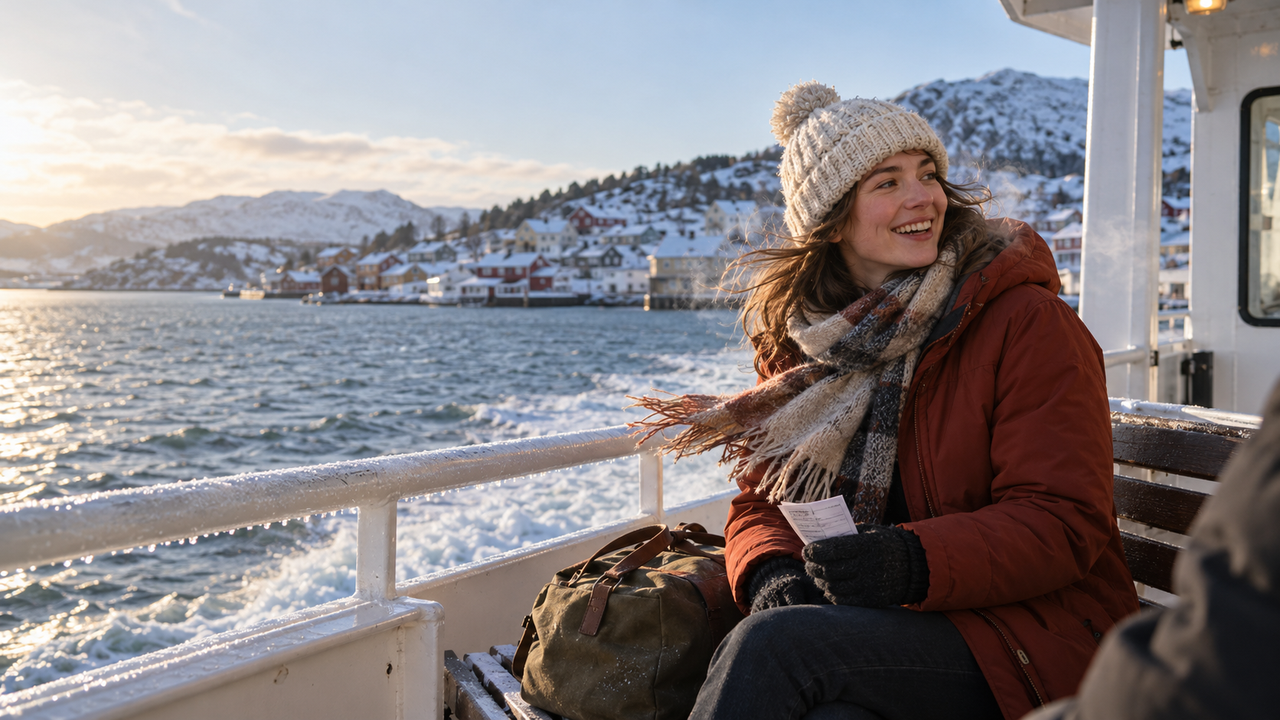
The first useful frame is not always the main attraction. Photograph the train pulling in, the ferry wake, the road sign, luggage on a snowy platform, or the first view through a fogged window. Arrival photos give the later scenes a beginning and preserve the anticipation that disappears once the destination becomes familiar.
Include People Doing Something Ordinary
Ask less often for a pose. Photograph someone adjusting a hat, brushing snow from a sleeve, reading a menu, carrying skis, or looking for the right street. These small actions reveal personality and make clothing, weather, and location part of the memory instead of a backdrop.For a portrait, move close enough to see the expression but leave enough context to explain the place. A face against blank sky may be attractive; a face beside the ferry rail, station clock, market stall, or cabin door is easier to remember.
Photograph the Weather Instead of Hiding It
Falling snow, gray sky, wind, wet pavement, and early darkness are not defects in a winter story. They explain the trip. Keep a few snowflakes near the lens, reflections on a coat, or breath in cold air when those details remain readable. Avoid cleaning the frame so aggressively that winter turns into a generic bright backdrop.
Save the Transitional Details
The most valuable travel photos often happen between planned stops: boots beside a radiator, gloves on a café table, a paper map, a room key, breakfast before sunrise, or a bag on the last train. These images give a photo set pace and become stronger with time because they preserve things you were not trying to perform for the camera.The official guide to building a cohesive road-trip photo story follows the same idea: place, people, movement, and detail work together better than a sequence of nearly identical views.
How Do You Keep Snow Bright Without Losing Its Texture?
Snow often looks gray when the phone holds exposure down to protect a very bright frame. It can look blue in open shade or beneath a cold sky. Raise exposure only until the snow looks white, not blank, and watch for footprints, ridges, or soft shadow that prove the surface still has detail.Do not judge the snow alone. Check three references together: the brightest snow you want to keep, the person’s face, and one neutral object such as a black glove, gray path, or white scarf. If the snow is clean but the face is unreadable, move the person or change your angle. If the face looks natural but every pale surface is electric blue, the color direction needs restraint.WayShot’s guide to keeping snow white and faces natural recommends solving exposure, focus, and color references during capture. A Style can organize the result, but it cannot rebuild completely clipped snow or facial detail that was never recorded.
How Can Warm Interiors Still Belong to the Same Trip?
A winter café, cabin, hotel lobby, or restaurant may combine pale window light with amber lamps. That contrast can make the indoor frame feel comforting, but it can also split a face into cool and orange halves.Choose one light source to lead. Near a window, turn the person toward the broad daylight and let warm lamps remain in the background. Deeper inside, use the warm light deliberately and avoid placing several small colored bulbs across the face. White cups, snow outside, pale walls, and skin are useful references when checking the result.The guide to WayShot Styles for cozy winter café photos explains why the same treatment cannot make cool windows and amber lamps identical. Preserving that difference often makes the indoor photo feel connected to the cold outside.
Which WayShot Styles Fit Different Winter Travel Scenes?
WayShot’s current official App Store listing describes five scene-oriented Styles and lets iPhone users shoot with a Style or apply one to a photo from the library. The useful choice begins with the light and subject, not with a universal winter preset.
DigiLite: Best for Snowy Daylight and Travel Sequences
DigiLite combines warmer color, lighter grain, and a no-flash daylight direction. It is the strongest starting point for snowy streets, ferry decks, scenic stops, markets, outdoor groups, and casual travel details.Its advantage is an easy daylight camera feel. Its limit is warmth: golden light, wood cabins, red coats, and skin can become too similar if the scene already leans warm. Check snow and neutral clothing before using it across a full day.
Clean Girl: Best for Soft Winter Portraits
Clean Girl favors warm portraits and balanced exposure. It suits window light, café portraits, relaxed outfits, hotel rooms, and calm late-afternoon scenes where expression matters more than a strong vintage effect.Its advantage is a gentler direction around people. It cannot fully solve mixed light, so choose the cleanest source before shooting and keep skin recognizable against the surrounding room.
DigiCam: Best for Intentional Flash After Dark
DigiCam is designed around bold direct flash, visible grain, saturated color, and after-dark energy. Use it for night markets, dinners, celebrations, close portraits, and friends outside a station when flash is part of the memory.Its advantage is immediacy: a nearby subject becomes bright while the street or room falls away. It can overpower reflective snow, pale faces, signs, and glass, and it cannot repair severe blur or missed focus.
B&W: Best for Weather, Shape, and Quiet Travel Moments
WayShot’s B&W Style uses stronger contrast and texture for portraits, streets, architecture, and visual storytelling. It can work well with bare trees, ferry rails, station shadows, falling snow, and solitary figures.Choose it when gesture and structure matter more than literal color. Avoid it when the coat, market lights, painted houses, or winter sky provide the emotional center of the frame.
ProCam: Best for Clean Details and Landmark Photos
ProCam is the cleanest direction in the current official lineup, with refined color and crisp detail. It suits well-lit architecture, interiors, portraits, and views that already feel complete through composition and light.Its advantage is restraint. A clean finish also reveals weak focus, harsh sharpening, or untidy framing, so use it when the original is sound rather than as a repair tool. The official guide to choosing WayShot Styles for different photo typesoffers a broader scene-by-scene reference.
Should You Choose a Style While Traveling or Edit Afterward?
Choose a Style while shooting when the light is stable and the preview helps you compose. A calm snowy walk, a planned café portrait, or a direct-flash dinner gives you time to check whether the treatment supports the scene.Edit from the library when the subject is moving, snow is falling, transport is changing direction, or daylight is disappearing quickly. Capture the clearest expression and strongest moment first, then compare Styles when you can inspect focus, skin, snow, and highlights at full size.Keep the usable source. A winter memory can be visibly stylized and still feel honest, but the treatment should not remove the weather, flatten every light source, or make the people less familiar.
What Should You Check Before Leaving a Winter Location?
- One wide frame explains the place.
- One candid frame shows a person doing something.
- One transition records how you arrived or moved on.
- One close detail preserves weather, food, clothing, or an object.
- Snow remains bright with visible texture.
- Faces are sharp, familiar, and not split by conflicting color.
WayShot can give a usable photo clearer color, contrast, texture, flash character, or a cleaner camera-like finish. It cannot recover severe motion blur, missed focus, fully clipped highlights, missing detail, or weak composition. When a key frame fails, take another version before the moment disappears.
FAQ
Why do my winter travel photos look flat?
Snow and overcast sky can reduce color and separation. Look for one clear subject, a darker background, a useful accent color, and visible snow texture before adding contrast or warmth.
Which WayShot Style is best for snowy travel photos?
DigiLite is the easiest daylight starting point, while ProCam suits cleaner detail and B&W suits shape and atmosphere. Choose by the actual light, and check that snow and skin remain believable.
How do I photograph people naturally in winter?
Photograph small actions instead of asking for every pose: adjusting a scarf, carrying a bag, reading a ticket, or warming hands. Keep enough background to explain the location.
Should every photo from one trip use the same Style?
No. Daylight snow, warm interiors, and direct-flash nights need different treatment. Repeat framing, color relationships, subject distance, and storytelling details instead of forcing one Style across every scene.
Can WayShot fix blurred snow or an overexposed sky?
A Style can shape the mood of a usable image, but it cannot restore severe blur, missed focus, completely clipped snow or sky, or detail the camera never recorded.
Download WayShot
Photograph the journey as well as the destination, protect the details that explain winter, and choose the Style that helps each moment remain recognizable.