

Best WayShot Filters for Cozy Winter Café Photos in 2026
What Is the Short Answer?
For most cozy winter café photos, Clean Girl is the best WayShot starting point because it suits soft indoor portraits, coffee runs, and balanced warmth. Choose DigiLite for bright window-lit drinks, pastries, and casual daytime details; ProCam for cleaner, crisper editorial shots; DigiCam for deliberate evening flash; and B&W when mixed lamp and window colors become distracting. Let the dominant light guide the choice. A Style can shape color, contrast, grain, and mood, but it cannot repair missed focus, motion blur, or a completely blown window.
Why Do Winter Café Photos Need a Different Approach?
A winter café often combines two very different kinds of light. The window may be cool, pale, and bright from snow or an overcast sky, while pendant lamps and wood surfaces add amber color inside. That contrast creates the atmosphere, but it can also make skin look too orange, whites look muddy, or the window lose detail.The strongest photos usually choose one main light source instead of trying to make every corner equally bright. WayShot calls its filter-like looks Camera Styles, and the best Style depends on whether the scene is a window-lit portrait, a warm tabletop detail, a polished still life, or an evening flash photo. The WayShot café lighting guide offers a useful rule: keep skin, white ceramics, and neutral clothing believable, then let wood, lamps, and darker corners carry the cozy mood.
Which WayShot Style Fits a Cozy Winter Café Best?
Why Is Clean Girl the Best Starting Point for Window-Lit Portraits?
Best for: portraits by the window, knitwear details, brunch, coffee runs, and everyday lifestyle photos.Clean Girl is the most natural starting point when a face is lit by soft daylight and the café contributes gentle warmth in the background. WayShot describes the Style around soft-looking skin, balanced exposure, and golden-hour warmth. That combination can keep a winter portrait bright without removing the atmosphere of lamps, wood, or a red scarf.Its limitation is also its strength: the look is restrained. It may feel too quiet for a dark evening scene built around direct flash, neon, or deliberate grain. Keep the subject close to the window, turn the face slightly toward the light, and avoid placing a bright snowy window directly behind the head unless you are willing to lose some outside detail.
When Does DigiLite Work Better for Daytime Details?
Best for: cups, pastries, books, scarves, group snapshots, and bright midday café scenes.DigiLite brings lighter grain, warm color, and a casual no-flash feeling. It works well when the window already provides enough light and the goal is a relaxed camera-roll image rather than a polished product shot. Use it for a cappuccino beside a paperback, a pastry near the glass, or friends seated in open shade.DigiLite is not designed to rescue a truly dark corner. If the original photo is underexposed or noisy, the lighter treatment cannot restore missing detail. Move the subject toward the window before shooting, or use a brighter source image from your library.
When Should You Choose ProCam?
Best for: clean menu details, ceramic still lifes, architecture, polished outfit photos, and editorial-looking café images.ProCam emphasizes refined color and crisp detail. It is the strongest choice when the café has clean lines, the source photo is already sharp, and the image needs a more finished look. A structured coat on a chair, a carefully plated dessert, or a wide interior with clear geometry can suit this direction.ProCam can make weak source detail more obvious. It will not correct missed focus, camera shake, or a blown window, and its cleaner finish may feel less spontaneous than DigiLite. Use it when precision is part of the story rather than when the goal is a soft, unplanned snapshot.
When Does DigiCam Suit an Evening Café?
Best for: dinner cafés, birthday moments, close portraits, mirror photos, and direct-flash details after dark.DigiCam is built around bold flash, visible grain, saturated color, and a compact-digital-camera feeling. It can turn a close evening portrait, a slice of cake, or a glossy handbag into a lively foreground against a darker room. Keep the subject within a few steps of the phone and leave some lamps or reflections behind it so the setting still reads as a café.The Style is intentionally noticeable. It can overpower pale daylight, subtle skin tones, or a quiet minimalist scene. Treat flash as a visual decision, not a universal fix for darkness, and check bright faces, cups, and reflective surfaces for harsh highlights.
When Can B&W Simplify Mixed Lighting?
Best for: rainy windows, steam, silhouettes, reflective glass, and cafés with clashing orange and blue light.B&W removes competing color and shifts attention to expression, shape, texture, and contrast. It is useful when the warm lamps and cool window create a color mix that distracts from the moment. Condensation, dark coats, white cups, and snowy streets can all become stronger graphic elements.Monochrome does not automatically make a weak photo moody. If the subject blends into the background or important shadow detail is already gone, removing color may flatten the frame further. Look for a clear light–dark separation before choosing it.
How Should You Use Window Light and Warm Lamps?
Start by deciding which light should lead. For a portrait, place the person beside the window and let the lamps remain behind or to the side. For a drink or pastry, turn the object until the window creates a soft highlight along one edge. Avoid mixing several small light sources across the subject, because skin and white ceramics can pick up different colors at once.When the window is much brighter than the room, tap the important subject on the iPhone screen and lower exposure slightly if the snowy background is turning pure white. If the face becomes too dark, change the angle or move closer to the window rather than expecting a Style to reconstruct the missing light. The WayShot low-light guide explains why Clean Girl suits softly lit indoor portraits, while DigiCam is better reserved for intentional flash-led energy.
What Should You Photograph for a Cozy Winter Café Story?
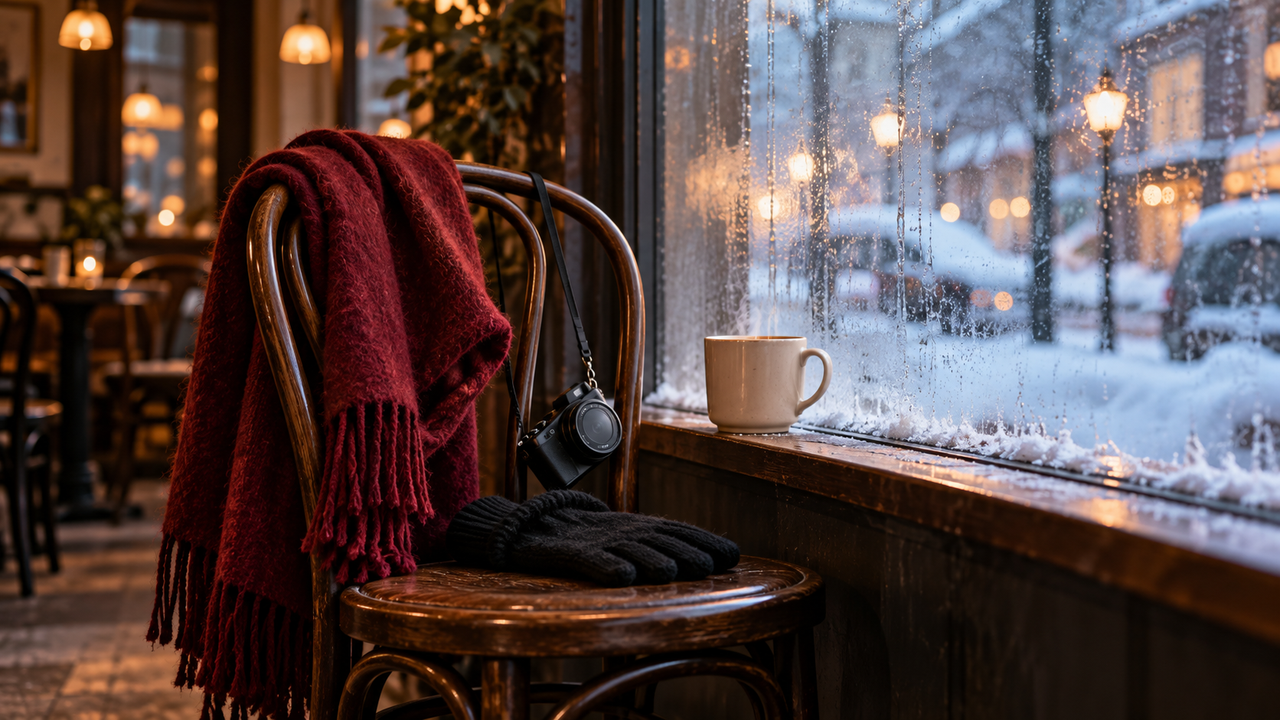
A small set feels more complete when it mixes people, place, and detail. Begin with one wider frame that establishes the window, lamps, or snowy street. Add a portrait or group photo, then move closer for a mug, pastry, gloves, book, scarf, or camera. A final transition image—such as condensation on the glass or a coat over a chair—can connect the warm interior to the weather outside.Do not force every frame through the same composition. A clean portrait, a loose tabletop detail, and a darker window reflection can still belong together when the light and color choices repeat. For an overview of how the five current options differ, see the WayShot Camera Style guide.
Should You Choose a Style Before Shooting or Edit Later?
Choose a Style before shooting when the café is calm enough to adjust the subject, angle, and distance. Seeing the direction early can help you decide whether the scene needs Clean Girl softness, DigiCam flash, or ProCam clarity. This route works especially well for a planned portrait or still life that can be repeated.Edit from the photo library when the moment is brief, the lighting changes quickly, or you want to compare several Styles on the same source image. WayShot supports both approaches. Keep the original, inspect faces and bright window areas at full size, and select the version that preserves the moment rather than simply showing the strongest effect.
How Can You Keep a Winter Café Set Consistent?
Consistency comes from repeated choices, not from forcing one Style onto every photo. Keep a similar balance of cool window light and warm interior color, repeat one or two accents such as cranberry red or cream, and use comparable subject distance across the set. Clean Girl can anchor the portraits while DigiLite handles brighter details, as long as both groups share the same light and color story.Limit the final selection to images that add something new: one establishing view, one portrait, one object detail, and one atmospheric frame are usually more cohesive than many near-duplicates. The WayShot camera-roll guide shows why recurring light, framing, and color matter more than a single universal filter.
What Can a WayShot Style Not Fix?
A Camera Style can guide color, contrast, texture, and mood, but it cannot recreate information the iPhone did not capture. Heavy motion blur, missed focus, clipped highlights, blocked shadows, and an unflattering light direction remain source-image problems. Take a steady backup frame, protect important window detail, and move the subject toward better light before relying on a Style.
What Else Should You Know?
Which WayShot Style Is Best for a Winter Café Portrait?
Clean Girl is the best general starting point for a softly lit portrait near a café window. It favors balanced exposure, soft-looking skin, and gentle warmth without making grain or flash the main feature.
Can WayShot Correct Very Orange Café Lighting?
A Style can reshape color and mood, but it cannot fully replace the original light. Choose one dominant source, move closer to the window when possible, and keep white cups or neutral clothing in the frame as a visual reference.
Should Flash Be Used in a Cozy Café?
Use flash when its direct, energetic character is intentional. DigiCam suits an evening portrait or detail with a bright foreground and darker room. For a quiet daytime scene, window light with Clean Girl or DigiLite is usually more natural.
Can Existing Café Photos Be Edited in WayShot?
Yes. WayShot can be used while shooting or with images already in the photo library, making it possible to compare Styles after the moment has passed.
Can a Filter Fix a Blurry or Very Dark Photo?
No. A Style can change the visual direction, but it cannot restore missed focus, severe motion blur, or detail that was never recorded. Start with the sharpest, best-exposed source image available.
Ready to Style Your Winter Café Photos?
Start with one clear window-lit frame, match the Camera Style to the dominant light, and build the rest of the set around repeated color and atmosphere.
Download WayShot for iPhone on the App Store or for Android on Google Play.