The Best WayShot Filter Styles for Different Types of Photos
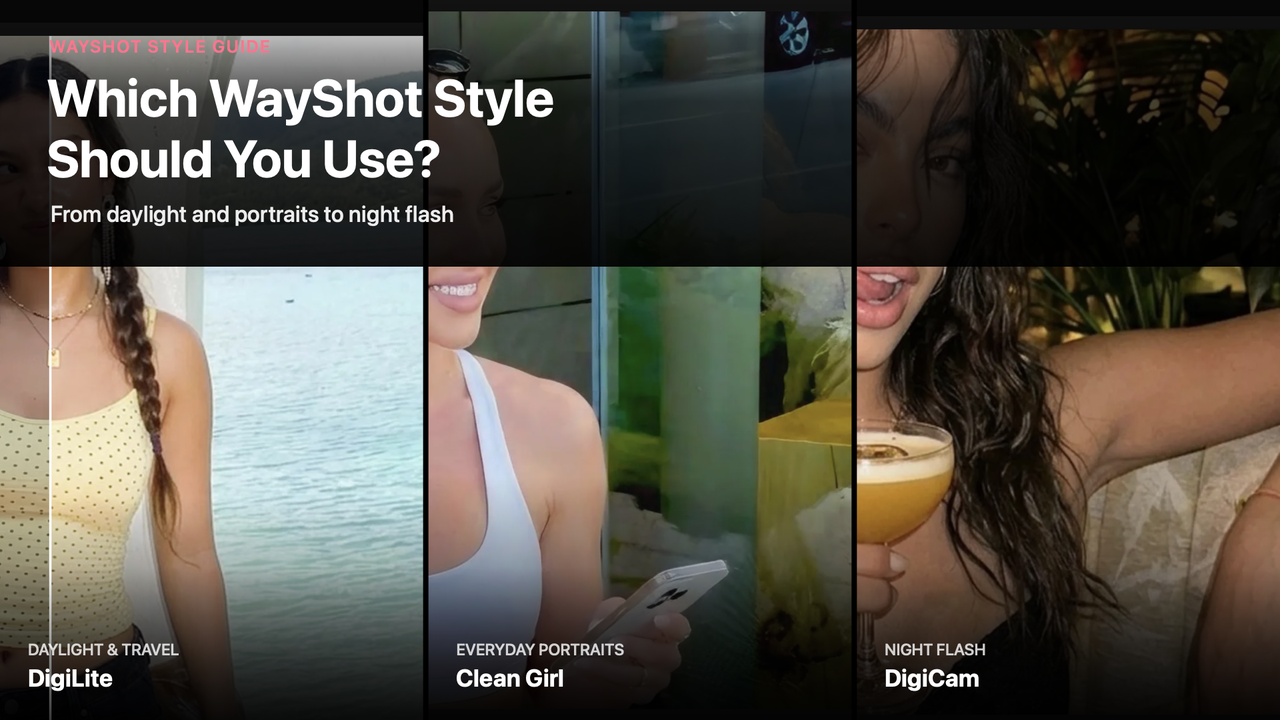
Which WayShot style should you use? Start with the scene, not the filter name. DigiCam is the clearest starting point for nights out and direct-flash energy. DigiLite is the easier choice for travel, beach days, and casual daylight. Digi-S moves toward bolder color around people, while Clean Girl takes portraits in a warmer, softer direction. ProCam is the cleanest option in the current official lineup, and B&W is for photographs that work better through contrast and texture than through color.WayShot is an iPhone camera and photo editor with a small, scene-oriented Style library. Its current US App Store listingsays users can choose a camera style, then shoot or edit a library photo in a few taps. The useful distinction is not that one Style is universally better. Each gives the same moment a different visual direction.
Quick Style Guide
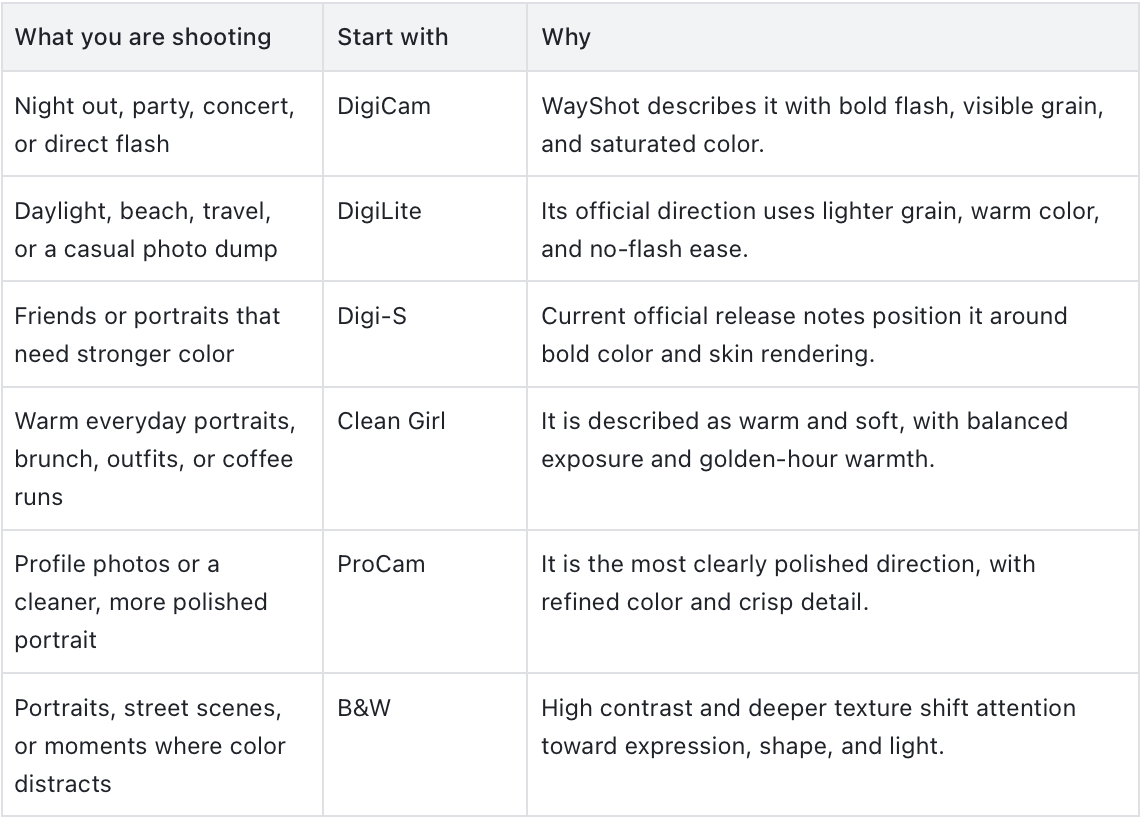
This is a starting route, not a promise that one Style will behave identically in every room or on every face. If the photo matters, compare the result with the original at full size. Check facial features, skin texture, bright highlights, and any small details you want to preserve.
DigiCam: Start Here for Night Photos and Direct-Flash Energy
DigiCam gives the strongest classic digicam direction in WayShot’s current official descriptions. The App Store listing associates it with bold flash, visible grain, saturated color, and after-dark scenes such as parties, concerts, and late-night memories.In WayShot’s DigiCam example, the scene moves from a darker restaurant portrait toward a brighter, flash-led night look. The subject stands out more clearly from the dim room, skin and drink tones appear warmer, and the photograph takes on more immediate after-dark energy. Because the Before and After frames are not identical, the example is best read as a visual direction rather than a controlled comparison.Use DigiCam when the flash look is part of the memory rather than a technical correction you want to hide. It is a natural first choice for a dinner table, a birthday, a club, or friends photographed after dark. It is less suitable when you want quiet daylight color, restrained texture, or a clean professional profile photo.
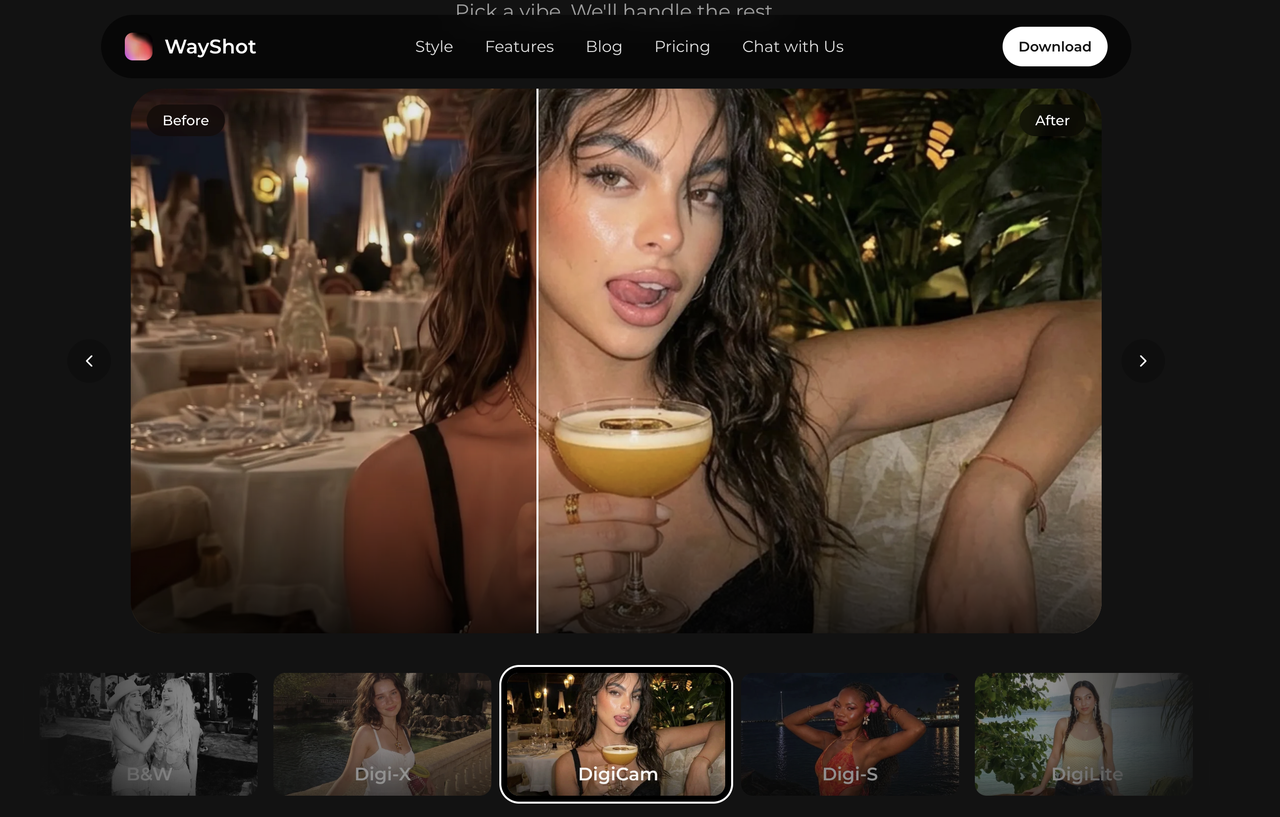
WayShot DigiCam: a restaurant portrait moving toward a brighter, flash-led night look.
Digi-S: Try It When People Photos Need Bolder Color
Digi-S is the better starting point when the photograph is still about a person but you want a stronger color response than the softer portrait options. WayShot’s current App Store release notes introduce Digi-S with “Bold color. Real skin. One tap,” while the official website includes it in the Style gallery.WayShot’s Digi-S example uses a waterfront portrait after dark. The After side lifts the subject and intensifies the warm red-orange clothing, pink flower, and reflected lights on the water. The setting remains recognizable, but the person reads more immediately against the dark background.That makes Digi-S relevant for colorful outfits, evening travel portraits, and social photos where the subject should remain the visual center. “Real skin” is an official product direction, not a guarantee across every complexion or lighting condition. Check familiar facial features and skin texture before sharing, especially when the source image is very dark or mixed-lit.
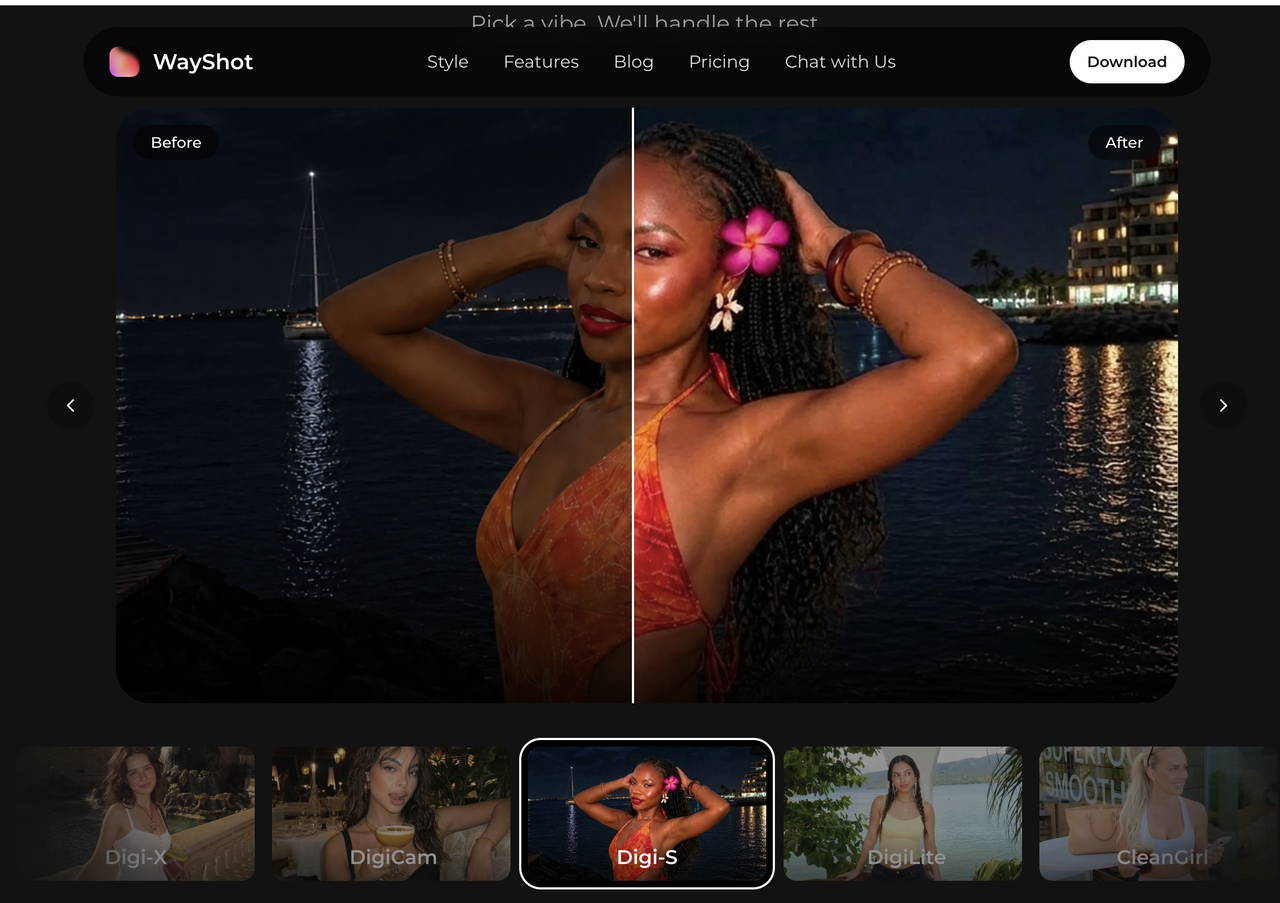
WayShot Digi-S: stronger warm color and brighter subject rendering in a waterfront night portrait.
DigiLite: The Most Natural Starting Point for Daylight and Travel
For beach days, trips, group photos, and ordinary outdoor memories, start with DigiLite. WayShot describes it as DigiCam’s daylight counterpart: lighter grain, warm color, and no-flash ease.In the DigiLite example, bright water, green foliage, a light-colored top, and a face partly framed by shade all stay recognizable. The After side is brighter and airier, with softer facial contrast and a paler, more open background. That lighter touch is why DigiLite is a sensible starting point for travel scenes that already have good daylight.DigiLite is the practical choice when you want a digital-camera hint without making grain or flash the main subject. It also suits everyday friends photos when the moment matters more than a dramatic aesthetic. Compared with DigiCam, it is the calmer route: daylight rather than after-dark, lighter grain rather than visible grain, and warm no-flash color rather than bold flash.
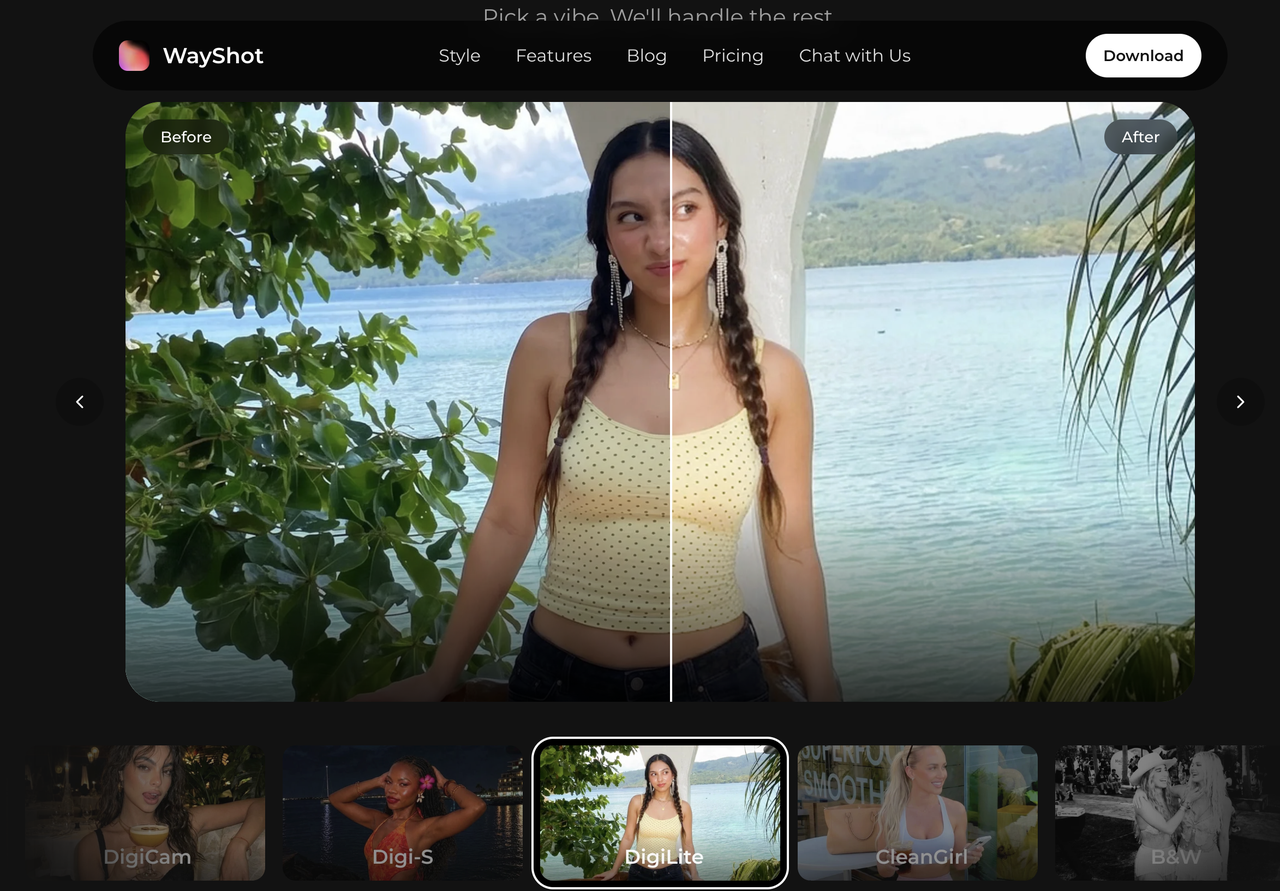
WayShot DigiLite: a softer, brighter direction for a daylight travel portrait.
Clean Girl: A Warm, Soft Direction for Everyday Portraits
Clean Girl is designed for portraits that should feel warm, bright, and polished without moving into the sharper ProCam direction. The current US App Store description names outfits, coffee runs, brunch, and everyday lifestyle photos as its intended scenes, and describes soft-looking skin, balanced exposure, and golden-hour warmth.WayShot’s Clean Girl example uses a casual café portrait. The After side is brighter and warmer, the person separates more clearly from the storefront, and the palette feels more sunlit without turning the scene into a night-flash image.Try Clean Girl for selfies, outfit photos, and relaxed portraits in window light or open shade. Because the official direction includes skin rendering, compare the result with the original instead of assuming the same effect will suit every face, skin tone, or exposure.
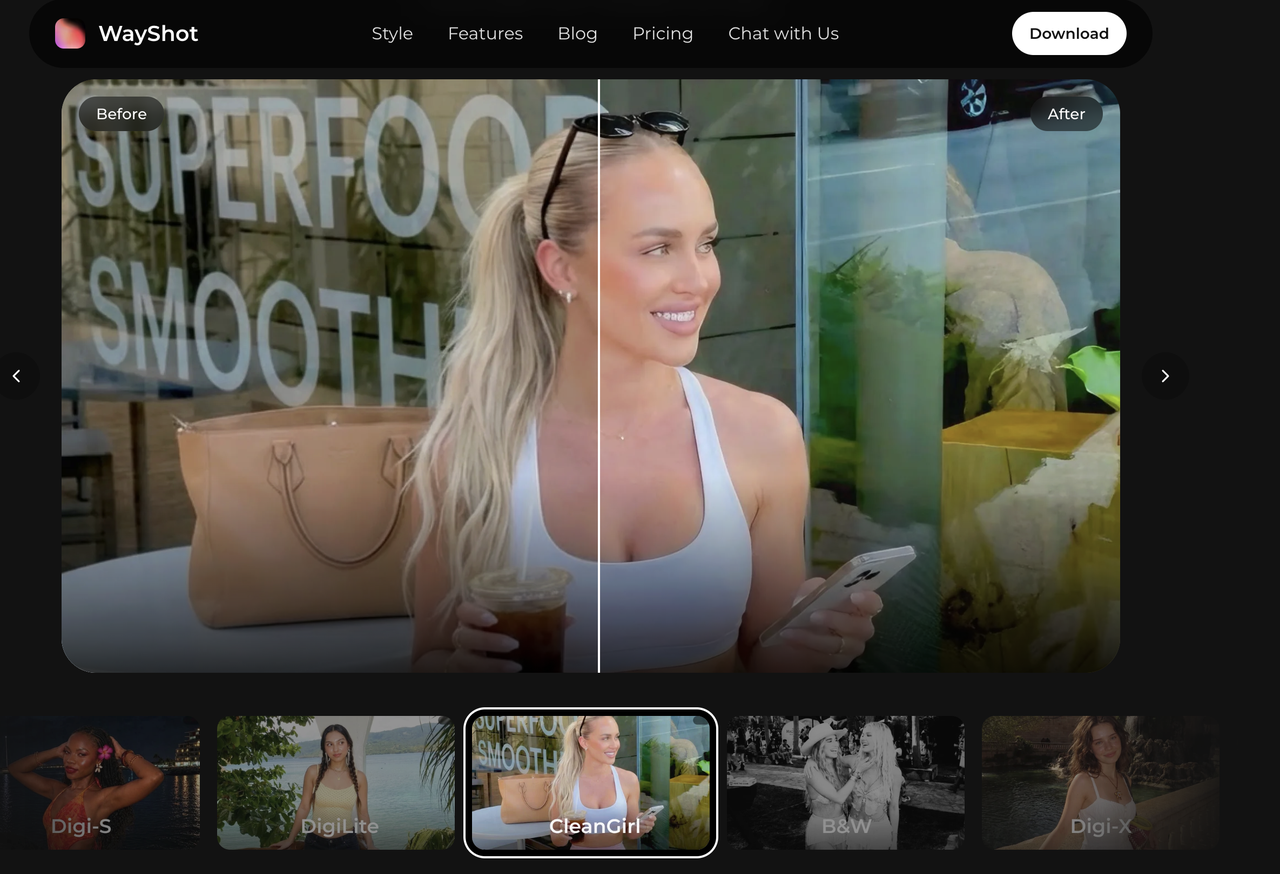
WayShot Clean Girl: a casual café portrait moving toward a brighter, warmer lifestyle look.
ProCam: Choose It When You Want the Cleanest Result
ProCam is the strongest fit for users who want a cleaner, more polished result rather than an obvious vintage treatment. WayShot’s App Store listing describes refined color and crisp detail for profile photos, creator portraits, and editorial-style images.This is the Style to try when the photograph needs to look composed and clear without making flash, grain, or nostalgia the main idea. A profile image, a simple portrait for a creator page, or a well-lit indoor photo are more natural use cases than a deliberately rough party snapshot.
B&W: Use Monochrome When Color Is Not Carrying the Moment
B&W is not merely the fallback for a difficult color photo. WayShot describes it through high contrast, deep texture, and atmospheric monochrome for portraits, street photography, and visual storytelling.In WayShot’s B&W example, two friends laugh in a busy outdoor setting. Removing color makes their expressions and connection more immediate, while the higher contrast gives the surrounding crowd and trees a documentary texture. That is a useful reason to choose B&W: the gesture, expression, or shape of the scene matters more than the colors in it.Try it for candid friends photos, street scenes, or portraits where mixed colors distract from the subject. Avoid treating monochrome as an automatic rescue for weak light; blown highlights, blocked shadows, and lost facial detail still need to be checked.
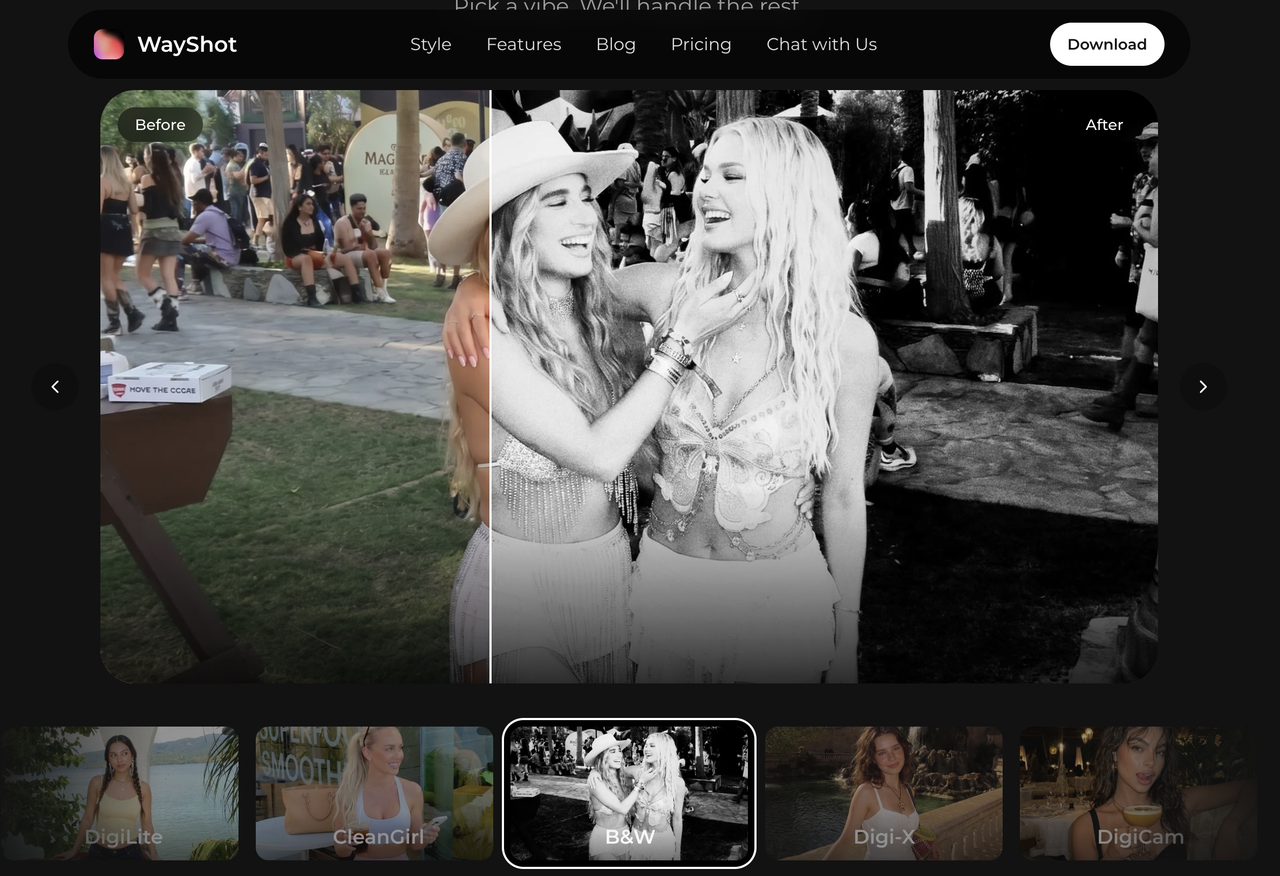
WayShot B&W: an outdoor friends photo that shifts attention toward expression, contrast, and texture.
How the Styles Differ in Real Shooting Decisions
DigiCam vs. DigiLite: choose DigiCam when direct flash, visible grain, and saturated after-dark color are part of the look. Choose DigiLite when you are in daylight and want lighter grain, warm color, and less visual weight.For portraits: start with Digi-S when stronger color is important, Clean Girl when you want a warm and soft lifestyle portrait, or ProCam when you want refined color and crisp detail. The right choice depends on the intended finish, not on a universal claim about which Style treats every face best.For indoor photos: use the room’s light as the deciding factor. DigiCam makes sense when you want the flash-led night-out feeling. Clean Girl is the more restrained option for a bright café or window-lit portrait. ProCam is the better route when the goal is a clean, polished frame.For travel: DigiLite is the most direct starting point for beaches, daylight streets, scenic overlooks, and casual group photos. If the trip photo happens after dark and flash is central to the mood, switch to DigiCam. If the subject is a colorful evening portrait, compare Digi-S as well.For the strongest digicam look: start with DigiCam. For the cleanest result, start with ProCam. For a photograph that should feel timeless rather than colorful, use B&W.
Conclusion
The right WayShot Style depends on the scene rather than a single universal aesthetic. Start with DigiLite for daylight and travel, Clean Girl or Digi-S for people, DigiCam for night and direct flash, ProCam for a clean, polished finish, and B&W when expression and texture matter more than color.Use these routes as a starting point, then check the finished photo against the original—especially faces, highlights, and details that matter to the memory. The most useful Style is the one that fits the moment and leaves the photograph recognizably yours.