

Which Film Effect App Creates Beautiful Autumn Forest Photos?
What Is the Short Answer?
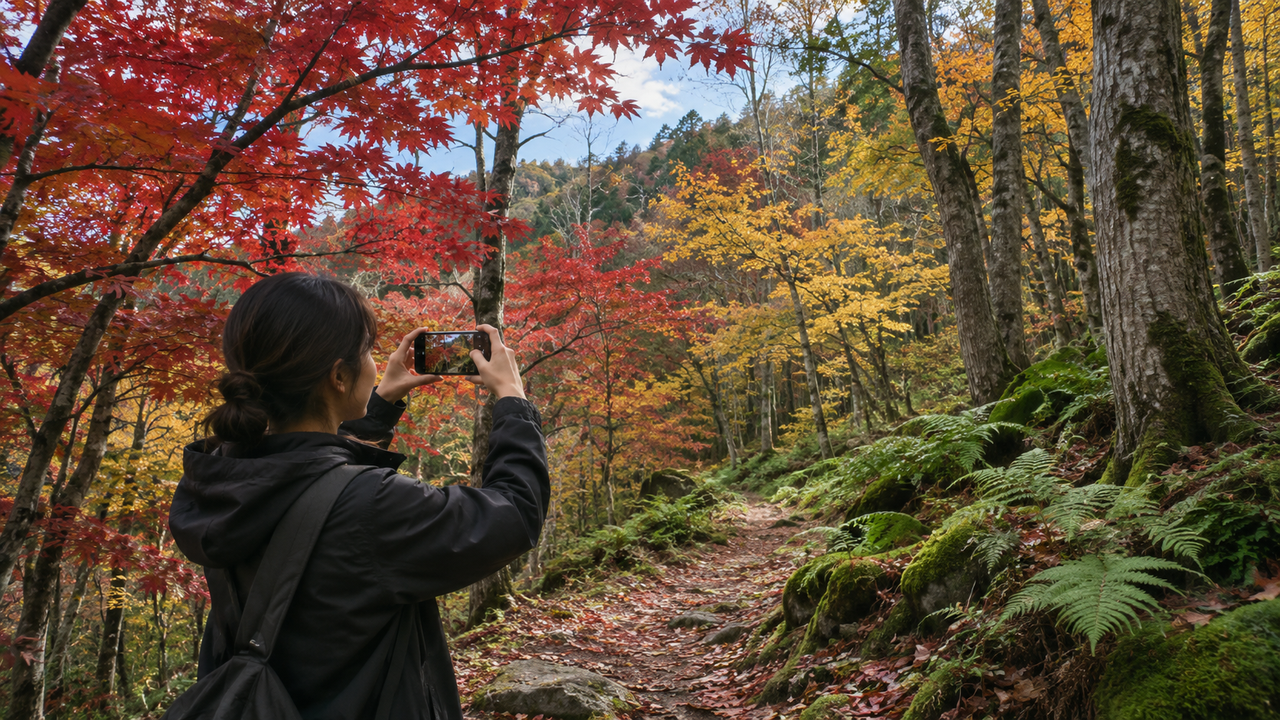
WayShot is a strong film effect app for autumn forests because its scene-based Styles add character without a long workflow. As a mobile imaging and camera app product specialist, I would start with DigiLite for soft daylight, then use ProCam when colorful leaves need a cleaner finish. A convincing result keeps red leaves, golden yellows, green plants, neutral bark, shadows, and sky visibly separate.
Why Do Autumn Forest Colors Become Difficult?
Autumn woods contain competing color zones. Red leaves can lose detail as saturation rises, yellow foliage can turn orange, and green moss may become muddy under a warm filter. Shadows can look too blue or too dense, while exposing for the forest floor may erase small openings of sky.A natural film effect should organize those colors rather than push them in one direction. Moderate contrast gives layers dimension; restrained grain adds texture. This reflects the principle behind realistic film-inspired color: white balance, highlight protection, and color relationships matter more than maximum warmth.
Which WayShot Style Should You Choose?
When Is DigiLite the Best Starting Point?
DigiLite is the safer choice for overcast walks, open shade, or soft late-afternoon light. Its warm daylight direction can lift gold leaves while keeping the scene relaxed. Use it when the original looks cool or flat, especially for trails, portraits, and wider views.
When Does ProCam Work Better?
Choose ProCam when the forest already has strong red and yellow color. Its cleaner finish helps bark, leaves, and green undergrowth remain distinct. It also suits bright days, when more warmth would feel artificial. WayShot’s Style guideexplains how each look fits different light and subjects.
How Should You Shoot for a Natural Film Effect?
- Build around color separation. Include red or gold leaves with green plants, neutral bark, stone, or trail surface.
- Protect the brightest area. Expose carefully so sky between branches does not become a white patch.
- Prefer soft or directional light. Overcast conditions, open shade, and lower side light are easier than patchy midday sun.
- Keep one Style across a sequence. Change it only when the light changes substantially.
- Check the result before moving on. Look at red leaves, green foliage, faces, and the sky—not only the overall warmth.
How Can You Tell Whether the Effect Looks Natural?
Compare the result with the original. Do red leaves retain detail? Does gold remain yellow rather than orange? Are ferns still green? Do shadows contain detail? Does the sky remain believable instead of cyan or white?If several answers are no, choose a quieter Style instead of stacking corrections. WayShot can apply a Style while shooting or to a library photo. The process works best when the source is focused, reasonably exposed, and composed with clear layers.
Which Autumn Photos Suit This Approach?
WayShot suits forest walks, trail portraits, leaf details, misty woods, picnic scenes, and overlooks. DigiLite works well for gentle daylight; ProCam suits richer color and cleaner detail. For more scene guidance, see WayShot’s countryside photo guide.
What Can a Film Effect Not Fix?
A Style cannot recover missed focus, motion blur, clipped sky, or absent shadow detail. It cannot repair harsh mixed light or weak composition. WayShot gives a photo a coherent direction; it does not replace local retouching or RAW development. See what WayShot can and cannot fix.
What Should You Know Before Choosing?
Which WayShot Style is best for autumn forest photos?
Start with DigiLite in soft daylight. Choose ProCam when vivid foliage needs cleaner separation and less added warmth.
Should fall photos always use a warm filter?
No. Warmth can support golden leaves, but too much makes reds, yellows, greens, bark, and skin converge toward orange. Preserve contrast between color families.
Can WayShot edit forest photos already in my library?
Yes. WayShot Styles can be used while shooting or applied to existing photos, which is useful when you want to compare a softer film look with a cleaner one.
Can a Style recover a white sky or dark forest floor?
Not if the original file contains no usable detail. Expose carefully at capture, especially when bright sky appears above a deeply shaded trail.